When I was five years old, I started first grade. The first six weeks were di?cult and I professed being ill every Monday morning — too ill, in fact, to go to school. On a Monday morning, six weeks into this cycle, my mother came into the living room and sat beside me on the sofa. “Is there something wrong at school?” she asked. Of course I hesitated before whispering “Yes.”
“What is wrong?”
Again, I hesitated before finding the courage to say, “I’m afraid of making mistakes.”
“Honey, that’s why you go to school. You go to learn from your mistakes!”
She sounded so sure.
“But,” I said, “if I make too many mistakes, I won’t get into the college of my choice.”
She did not laugh. And I went to school the next Monday.
*
The scripture shared today comes from the 12th chapter of 2 Corinthians. At this time in Paul’s ministry Corinth is a “new city”:
• It was founded by order of Julius Caesar in 44 BCE;
• It was an ethnic mix of Syrians, Egyptians, Greeks, and Jews;
• It was a prosperous seaport city, the capital of the province which included the city of Athens.
• It was a judicial seat; and
• Every two years, Corinth hosted the Isthmian Games in a stadium that held 15,000.
Paul’s Ministry in Corinth:
• Probably began in 50 CE when he took lodging with the husband-wife team, Aquila and Priscilla, both Jews and tent-makers.
• He preached in the synagogue every Sabbath but when some of the members opposed his preaching, Paul withdrew and preached in a private home.
• An interesting note: The President of that synagogue later converted to Christianity.
• Paul probably spent 18 months on this first visit before leaving the city.
• In his absence new converts were confused and sought Paul’s advice on issues including marriage, food sacrificed to idols, spiritual gifts, etc.
• Therefore, Paul’s letters to the Corinthians are instructive as he shares his thoughts on what it meant to be a new “being in Christ.” The social and ethical implications were numerous, for example the sharing with the have-nots at the communal meal.
Like First Corinthians, a compilation of letters previously sent to Corinth, 2 Corinthians is a compilation of at least three letters:
• The Scripture read today from the 12th Chapter of 2 Corinthians is thought to have been in the first letter. This means that the previous chapters in 2 Corinthians make up the second and third letters.
• Today’s scripture from Chapter 12 is about Paul. Even when he writes, “I know a man in Christ,” he is talking about himself. And even though he has had visions and “heard inexpressible things,” he had been “given a thorn in the flesh” that he sought to have God remove. But when that torment remained, Paul heard God say, “My grace is su?cient for you, for my power is made perfect in weakness.” Paul believed that God, like a lever, could move all things, could make all things possible in spite of our weaknesses. But God did not remove that thorn and by not removing it, Paul saw himself at the mercy of a God whose “spirit was su?cient.”
• Paul is defending himself against the teachers who have come to Corinth and have undermined him and his message. Paul calls these individuals “super apostles” because they are “false apostles, deceitful workers”. They are “masquerading as apostles of Christ.” Therefore, Paul is quite combative.
• In contrast to the lack of adversity these “false apostles” had endured, Paul itemizes the a?ictions he has su?ered as an apostle. This is called “Apostolic A?iction”. As an apostle, Paul has been imprisoned, flogged, stoned, shipwrecked and he has faced bandits, swollen rivers, hunger, thirst, cold, and exhaustion.
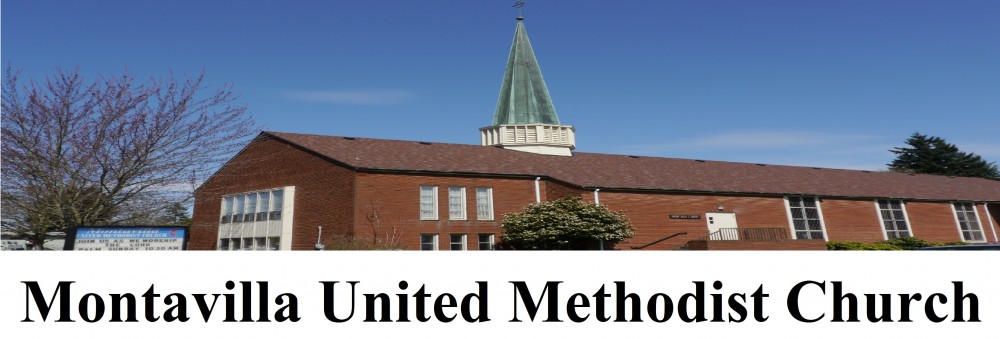
Let’s bring Montavilla UMC into this sermon. I think Paul would have commended you.
• He would have commended how you take care of each other, how you practice “neighbor-love”, how you share food and space and ministry with those whom society does not treat well, and how you try new arrangements and seek meaningful ministries.
• For example, In realizing that our budget figures were in “the red” and our church building was under-utilized, you sought renters who could compensate for our deficiencies. The building now cares for those who are immigrants and worship here, are houseless, are poor, and are critically judged by many.
• You have acknowledged your weaknesses when deciding that the congregation was too small to care for a building this size, that we do not have members who can repair the heating system, paint the steeple, or install new windows.
• You have chosen not to spend down the Endowment Fund to repair this aging building.
• Our weaknesses are working with others to build a new building that will not only provide housing but safety and hope. And at the ground level of Las Rosas Nuevas, will be the worshipping center for this congregation whose delight in their weaknesses and their belief in God whose “spirit is su?cient” made the housing project possible. Paul would commend you.
About these weaknesses:
• When we recognize our weaknesses, we are saying that we are not perfect. No surprise there! Both Paul and John Wesley would agree with that appraisal. Together we “aim for perfection.” But, a lack of perfection, or imperfection, —can strengthen relationships as well as allow God’s Spirit to move through us.
• When we share our weaknesses with each other, we become vulnerable.
• Dr. Brené Brown in her book THE GIFTS OF IMPERFECTION, explains that this honesty takes courage — a word that comes from the Latin cor which means “heart”.
• Courage originally meant “To speak one’s mind by telling all one’s heart.” To be honest is to be vulnerable. In this community that professes to be Christian, admitting imperfections and being vulnerable are essential; both testify to our need for each other and for Christ’s redemptive power. It helps to remember that each of Jesus’ apostles had a weakness.
• Our community has built Connection which Dr. Brown says “is the energy that exists between people when they feel seen, heard, and valued. Being vulnerable and feeling valued lead to a connection that can be honest about its strengths and its shortcomings. We are a connection. In comparison to a mega-church, it is a small connection, a humble one. And the reality that we are forging ahead, in spite of our weaknesses, confirms Paul’s exclamation, “I delight in weaknesses.”
These weaknesses include not-so-serious imperfections like leaving a day’s worth of dirty plates in the sink or not finishing the latest Debbie McComber book. Imperfection has gradients. At one end, the not-so-seriousimperfections can be idiosyncratic, occasional, and relaxing; they don’t derail us but restore our spirits and relax us.
At the other end are torments. Between these two fall the thoughts and feelings that disconnect us from others, such as resentments, regrets, anger, shame, compulsions, disappointments, and anxiety. These imperfections demand courage to address and a healthy dose of love-filled guidance. Such guidance led a 5-year old anxious first grader who was afraid of making mistakes to becoming a college instructor forty-three years later.
Our courage and connection most likely will lead to Las Rosas Nuevas. But let’s say that a disappointment intervenes and the housing project does not develop and we retain this building. Of course, we would pray and appeal to God to lift this setback and/or to point us toward a new way. In that circumstance, Paul’s words could reassure us.“For when I am weak, then I am strong.” When we are weak, we are strong because “God’s grace is su?cient for us.” God will always work with our weaknesses, and for this assurance we can shout Alleluia.